Hannah Clarke’s story could have been mine
CW: Domestic violence & homicide
*This is an unpublished chapter from ‘The Stories We Carry’ - the powerful new release from best-selling author and award-winning speaker and advocate, Jas Rawlinson.

No. Oh God, no.
Grief and horror swamped me, my eyes frozen to the TV screen. Not again, cried my heart. Please, no.
On-screen, the reporter spoke somberly, recounting the news of another woman and her children losing their lives to male violence.
That woman, was a local Brisbane mother named Hannah Clarke.
As we’d later discover, Hannah had recently ended an abusive relationship with her husband, after coming to understand that the control, coercion, and behaviour she had been subjected to for so long were – in fact – signs of domestic violence. She’d decided to take control of her future, and ensure she and her three beautiful children were able to live in safety.
Tragically, they never had the chance.
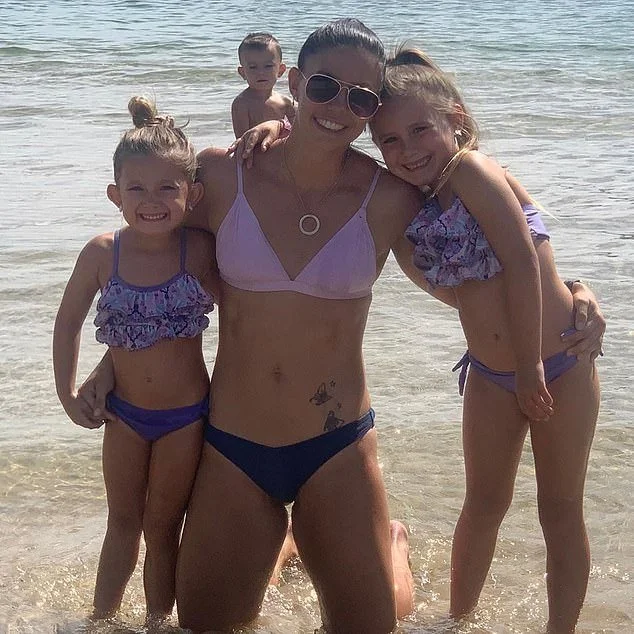
On this morning, in February 2020, Hannah’s ex ‘ambushed’ her outside her home, and jumped inside her car.
Before she could get away, he doused Hannah and his three children in petrol and set them all on fire.
In an act of strength and bravery that still haunts me to this day, Hannah — despite her injuries — tried to save her children.
That day, Hannah, Aaliyah, Laianah and Trey passed away from their injuries. Her ex took his own life before he could be arrested.
I never knew Hannah, and yet, this senseless loss — this disgusting, devastating act — shattered me into a million pieces.
All day I cried — I just couldn’t stop the tears. Every time I thought of Hannah, they were there. Every time I pictured her children, I broke down.
Because I knew that what happened to Hannah, could have happened to my family.
I was only 10, when I first noticed the change in my father’s behaviour; the way in which — over the months to come – we all went from feeling carefree and happy, to constantly walking on eggshells. Months bled into years — years filled with despair, fear, and anxiety — as Dad’s moods became worse, and the emotional and mental abuse became more frequent. There were ‘small’ things; days where he hid the car keys so we couldn’t go out, or took the batteries out of the mouse so I couldn’t use the computer. Days where he erupted into a monstrous creature; his eyes alight and his mouth pulled tight with rage as he screamed and ranted — or, even worse, when he spoke with a quiet, belittling sneer.
“You might be smart when it comes to books, but you’re dumb at everything else.”
“You’ll never be able to look after an animal on your own — all your animals will die if I’m not around.”
“Wow, it’s true what they say about license photos — look how bad you look!”
“Bitch.”
“Witch.”
“I hate you.”
I thought of all of this, as I read the news and stared into the smiling faces of Hannah, Aaliyah, Laianah and Trey. I remembered the afternoon that my mother, brother and I ran across a paddock to escape my Dad’s rage.
I recalled the morning where Dad mashed his foot against the accelerator of our family car, on the way home from church, and flew straight toward a tiny, wooden, one-lane bridge.
Vaguely, distantly, I could hear my mother’s screams; the pleas. “What are you doing?! Slow down! Stop!”
If another car had been coming around the bend, I wouldn’t be here today.
As a survivor of family violence, Hannah’s story hit close to home. But what made it worse were the online comments.
‘This is what happens when women isolate a man from his kids…’
‘He was driven to this. Parental alienation is real. This man was suffering.’
‘She should have just let him see his kids.’
I wanted to scream. To rage.
“How have we come so far as a society, to still have people who believe that a man’s decision to MURDER his own children AND his ex-wife, is her fault?!”
It was a form of evil that I just couldn’t comprehend – but what made it even harder, was the knowledge that in just 24 hours’ time, I would be standing in a building just minutes away from Hannah’s house, presenting to community members on domestic violence.
What the f*ck am I meant to say to this community? I wondered. Nothing I can do, say, or share will erase what has happened. Hannah did everything right — she left her abuser. She prioritised her kids. And look what happened! What on earth can I share that’s of any value?
That night I lay in bed, my mind torturing me with relentless nightmares; my dad’s face at the centre of each one. I barely slept, and when the sun rose, I stared through bleary eyes at the ceiling, wondering how I was going to get through the day.
Presenting to a grieving community was the last thing I felt like doing, but I’d committed months in advance to this speaking gig, and I knew I didn’t have a choice.
As I arrived at the venue, I noticed the somber feeling in the room; the name that was on everyone’s lips. The air felt heavy; the room full of devastation. I knew there was no way to gloss over what had happened — all I could do was hold space for this community.
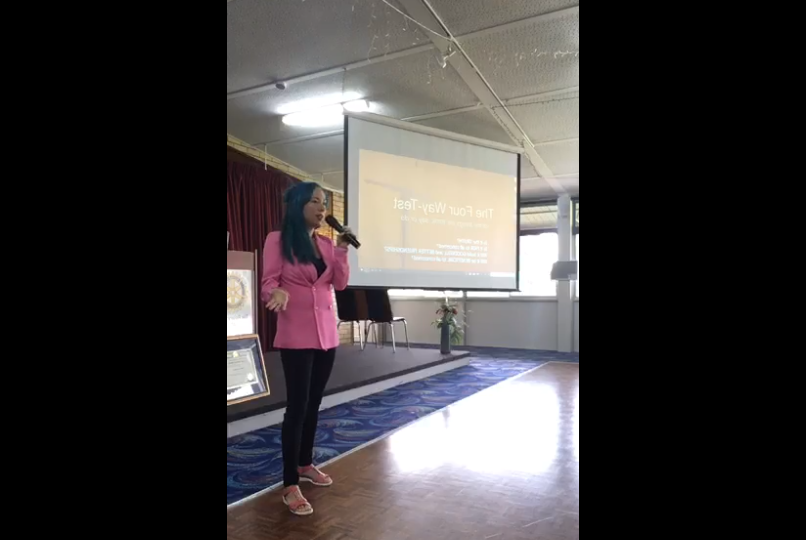
Jas Rawlinson, presenting to the Carindale community on the day after the murder of Hannah Clarke and her children
I decided to follow my intuition; to be as real and raw with this audience as possible.
To not pretend that this was going to be an inspiring and easy morning of conversation. Because it wasn’t. It never would be. How could it?
I took my place at the front of the room. Held the microphone between nervous, jittery fingers. “To be honest and upfront, I think this might be one of the most meaningful talks I’ve given in the past few months,” I said. “And I’d like to begin by asking if we can take 30 seconds silence to honour Hannah and her children.”
Over the next 30 minutes, the room was dead silent. Not a single voice, movement, or clink of glass could be heard. Every eye watched on with solidarity as I shared about my own childhood, the work I’d done as an advocate for ending domestic violence, and the warning signs of abuse that people needed to be aware of.
Most importantly though, I wanted them to honour Hannah and her children by refusing to ever stay silent.
“Don’t be afraid to take action,” I urged. “If you have a suspicion that domestic violence is going on in your community, and you call the police and it turns out to be nothing...there’s no harm in that. But it’s so much worse if you sit back and do nothing...and then find out you could have helped save a life. Don’t be a bystander.”
Driving home that morning, I was filled with a mixture of sheer exhaustion and intense fulfillment. What I had done was not easy. As a survivor of family violence, it was incredibly triggering.
But knowing that I was able to use my voice to create change made it worth it.
Looking back, I feel that I’ve lived an extremely lucky life. That might sound like an odd statement, as someone who survived almost a decade of family violence, only to lose my father to suicide at age 18, and then end up in a toxic relationship where I was sexually assaulted. But I really do believe that I’ve been lucky.
Because my mother, brother and I are all safe.
There were moments — several — where we really could have ended up as statistics. Names and faces that smiled back from the newspaper, never to exist anywhere, ever again, but the faded pages of the news.
I’m grateful every day that we weren’t.
And so, I press forward.
Every day of my life — every moment spent advocating, presenting, or speaking up when I see domestic violence happening in public — is about honouring the women and children left behind.
Women like Hannah, Aaliyah, Laianah and Trey.
***